
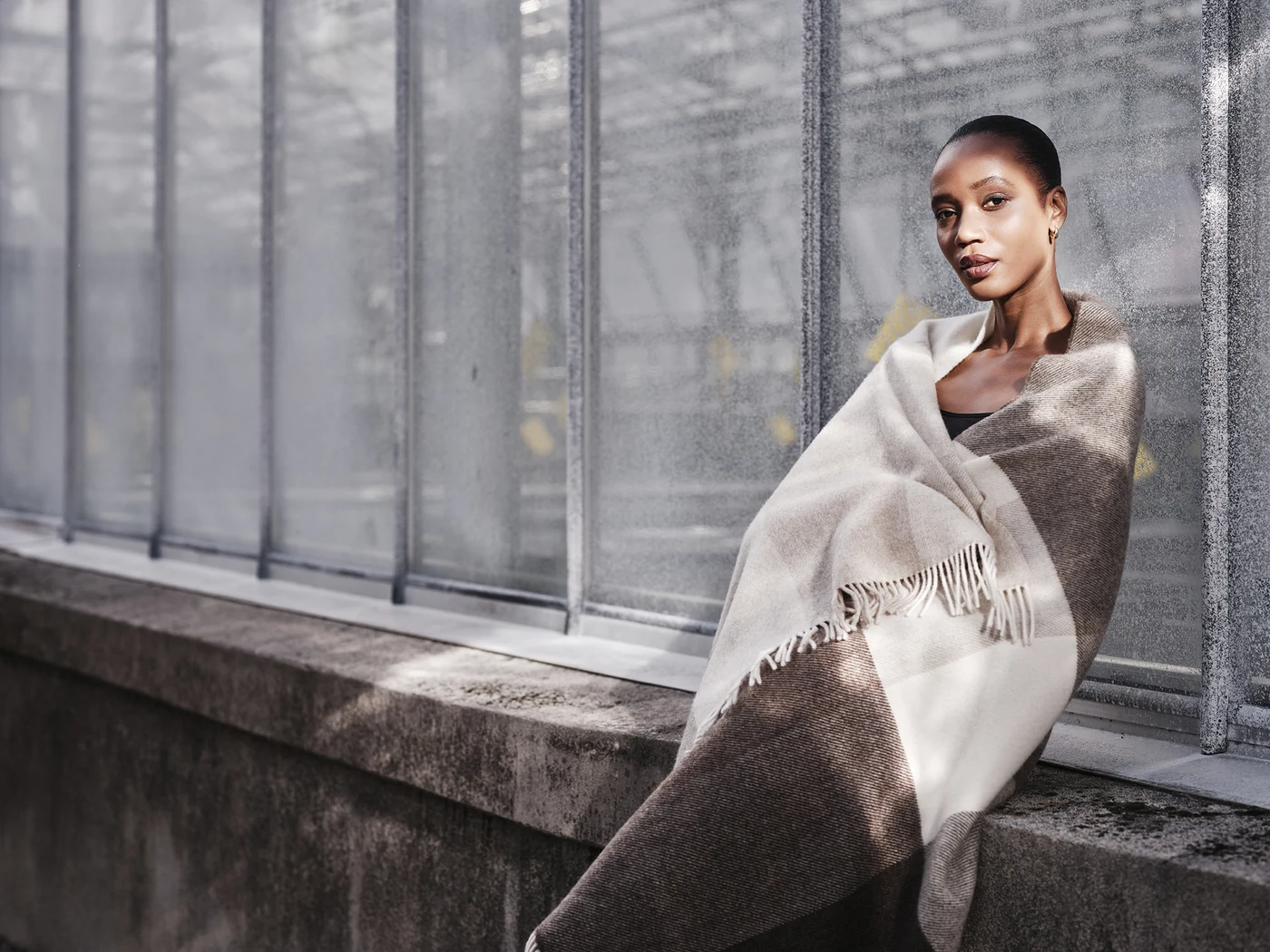
Deceleration as a sustainable status symbol.
Higher, faster, further. We are surrounded by the noise of a world that is not only flowing past us ever faster, but also sweeping us along more and more. Yet what if true strength had something to do with softness? And what if true luxury lay not in movement, but in pausing?
Quiet as an exceptional state
Social belonging, which Maslow already describes in his hierarchy of needs, is a basic need that comes right after food, drink and a roof over one's head.
The only problem is when we have to buy our standing in society and our sense of belonging – at least seemingly – through our possessions. The true price for this is always being available, constantly on call, ready to go at any moment. And in the process, forgetting the essence of being human.
Yet it is the simplest things that bring us back into harmony with ourselves. Those who wake up in the morning to cool, smooth bed linen experience a moment of calm even before the day begins. Those who wrap themselves in a thick, soft bathrobe in the evening give their body a tangible signal: it is time to let go.
Every material tells its own sensual story. Fine cotton is the classic among natural fibres – this is what home feels like. Linen brings a crumpled, airy life with its conscious imperfection. And silk against the skin feels like a tender caress. These are gentle feelings that these fabrics convey.
Might is right
Everyday competition is intense. The question «Who am I?» has long since been replaced by «What do I achieve?» Even children are sent into this race at an early age. Grades are the first currency of self-worth. Praise is only given for corresponding performance. And so many of us carry a quiet, deep-seated feeling with us: that love and recognition are something that must be earned.
Suffering from burnout – also known as exhaustion depression – has not only become socially acceptable, but testifies that the sufferer has exerted themselves to the absolute limit. As if exhaustion were proof of importance. Illness becomes a certificate of self-abandonment in the name of maximum productivity.
Having no time for social contact has suddenly become normal. Meeting friends? Too tired. A family trip? No time. Replying to a message from a dear relative? Too stressed.
We should realise that strength lies in the security of home. And that true sense of home, which every person longs for so deeply, comes from human warmth – from gentleness.
Many of us live with unhealthy beliefs: That success equals worth. That rest means weakness. That someone who goes slower is left behind.
He who asserts himself wins. Whoever is louder, tougher, more aggressive is regarded as successful.
Indulgence as an alternative to the dog-eat-dog mentality
In a culture built on competition, growth and self-assertion, gentleness is often equated with weakness. Anyone who shows that something affects them seemingly exposes a vulnerable flank. So we learn early on: gritted teeth. No crying. Stay cool.
In doing so, remaining vulnerable can be the greatest strength. Gentleness demands showing oneself as one truly is. Admitting that something affects you. Listening without immediately retaliating. Forgiving someone even though you would have the right to stay angry.
Gentleness requires empathy for oneself and for one's fellow human beings – and a deeper self-assurance. For only those who are certain of themselves can afford to be soft without the fear of giving themselves up in the process.
The gentle rebellion
Our habits are so geared towards speed that even relaxation can become a marathon of self-optimisation. Everything has to be quick, efficient, worthwhile, and make us even more resilient in the long run.
The best sleep rhythm, the most productive weekend, self-care: all just more items on the to-do list. Surrounded by expectations, by the unwritten rule of always having to function in order to belong, we do not dare simply to surrender to a whim, to a good feeling.
Yet there is an unspectacular kind of resistance. It happens in a room where someone drapes a soft blanket around their shoulders. The very moment someone pauses and surrenders to relaxation, instead of pressing on in a tense manner. In the decision to treat oneself to something pleasant. Even though no one is watching, even though none of it provides proof of performance or contributes to raising one's status. We call this the gentle rebellion.
Quiet luxury self-love
Anyone who takes their time, who takes it easy, who is gentle with themselves is quickly asked: Can you afford that? As if gentleness were a luxury and not a basic need. Or perhaps it is precisely this luxury that we should afford ourselves. With small changes that make a huge difference.
- Allowing oneself comfort without having to prove oneself for it. Don’t just treat your own body as a tool; understand that the soul resides within it. Unconditional self-love is nothing to be ashamed of. A soft pillow, a satin duvet cover that glides over your skin, a cashmere or woollen throw to keep your feet warm on winter evenings: we’ve all earned these things.
- Taking one's own needs seriously. In contradiction to a culture that wants to make us believe that having needs means weakness, simply being allowed to feel overwhelmed for once too. Asking ourselves, «What do I really need right now?», and acting accordingly. Enveloping ourselves in a soft dressing gown to fall asleep in it after a bath, wrapped in its warm embrace. Or getting the circulation going with a massage using a fluffy towelling bath robe and thereby being ready for new adventures.
- Prioritise quality over speed. Scrolling through TikTok or watching a documentary? Consuming social media or meeting up with friends? Shopping for fast fashion or buying quality?
- It is a conscious decision not to be part of the throwaway society. In every respect: attention, relationships, clothing. Even if maintaining a relationship or caring for a fabric that lasts long can sometimes be more demanding, almost inconvenient, awareness of quality makes moments valuable once more. Slowing down is becoming the new status symbol.
- Do not equate gentleness with weakness. If strength is only ever allowed to be loud, tough and uncompromising, there is no room left for anything that is gentle, vulnerable and quiet. Yet it is often in those very qualities that the greatest strength lies. Showing your soft side takes courage.
Courage to be soft
Soft fabrics are not a sign of compliance. They stand for self-determination, high standards of quality and the strength to consciously choose gentleness. Christian Fischbacher has always followed this philosophy. We wish for a sensitive approach to one another – and to ourselves.
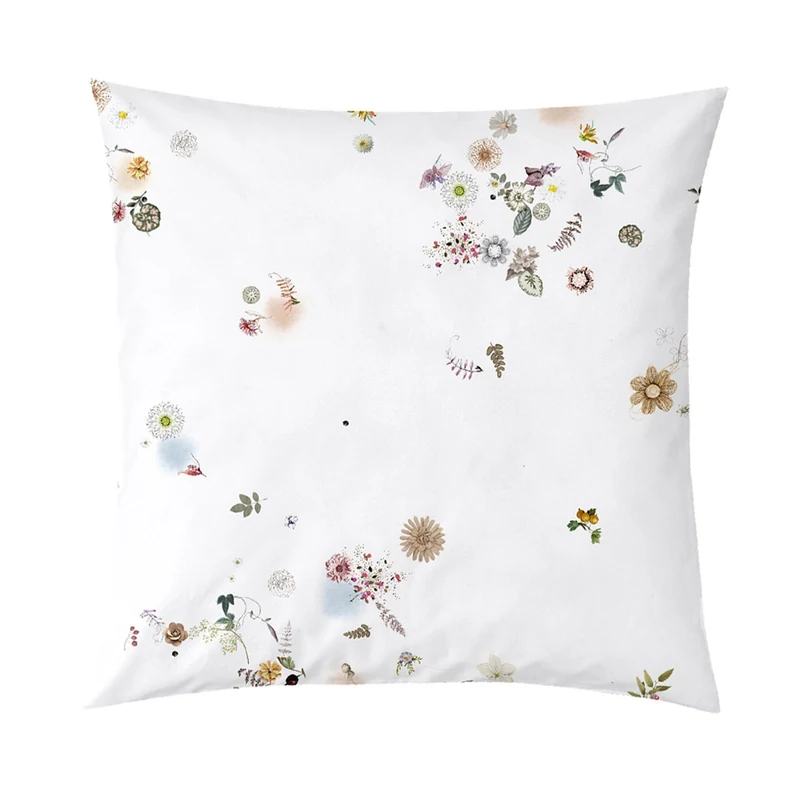
The best example of this is our fine satin bed linen set POWDER. Delicate flowers and botanical prints adorn the fabric, into which a subtle dot pattern is woven. It is bed linen that conveys delicacy, whilst combining this with the enduring strength of the highest quality materials. It is the emblem of gentle rebellion.
Discover material
FINE SATIN POWDER
Delicate flowers and botanical prints on finest satin, woven with a subtle dot pattern.
Discover these and many more products from our top-quality collections, designed for your comfort, your true needs and your moments of relaxation in Switzerland.