



The Colour of Dreams: What Your Bed Linen Reveals About You
May 4, 2026
What our favourite colours in the bedroom say about our personality.
“Colours are the mother tongue of the unconscious.”
Today, this quotation is often attributed to Carl Gustav Jung. In all likelihood, however, it belongs more to the realm of modern pop psychology.
What is certain is that the Swiss psychiatrist and psychologist devoted considerable attention to the collective unconscious and the symbolism of dreams. The pioneer of depth psychology was convinced that the psyche should be understood through images and symbols. Accordingly, he believed that colours only acquire psychological meaning within an individual context. According to Jung, red does not mean love for everyone, nor does yellow mean optimism.
Colour expert Karsten Homann takes a different view: in his opinion, the effect of colours is always the same and deeply rooted in our psyche through physical reactions – red, for example, is said to be stimulating for everyone, while brown has a grounding effect. The strength of that influence, however, varies from person to person.
There are those who get along well with red in every area of life, while others are negatively stimulated by the colour. Calm people who are more of a sky-blue type cannot relate to shades of red and would sleep less well in red bed linen because of its stimulating effect.
Colours also have a meaning that is linked not only to our individual subconscious, but also to our cultural and social environment.
The Blank Slate: White
White is considered neutral; the colour stands for new beginnings, justice and impartiality. It is also associated with purity, innocence, wholeness and perfection, which is why modern wedding dresses are traditionally white. In some cultures, the colour even expresses the heavenly and divine. Not everyone can identify with white, however, as it can also appear cold and unapproachable to some people.
People who surround themselves with white are considered highly conscientious, orderly, but also rather introverted and reserved. If you choose white for your bedroom and bed linen, colour psychologists would assume that you possess or value these character traits in your private surroundings.
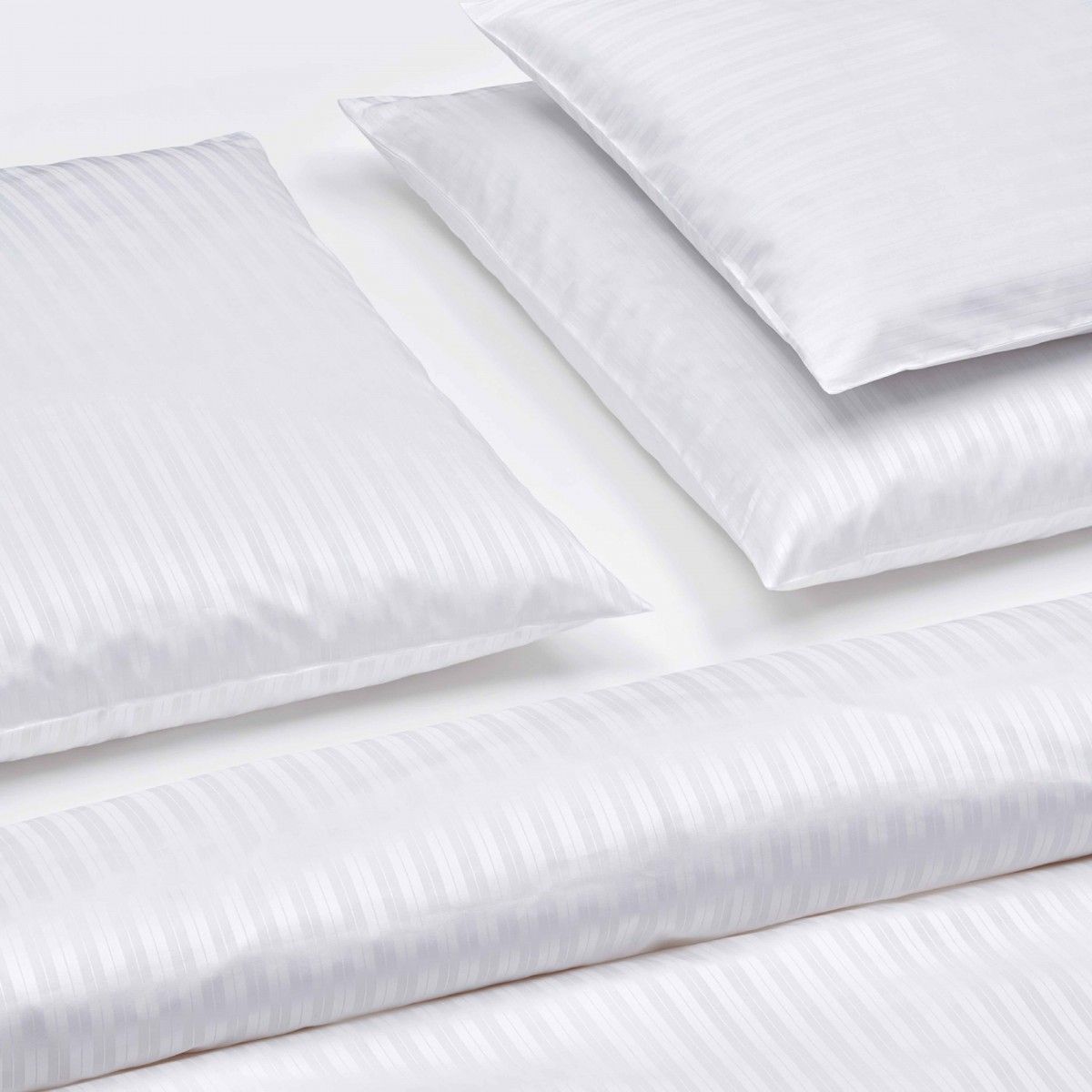
If white means purity, order and lightness to you,
AVENUE is the perfect bed linen for a bedroom with a clear, refined character.
Connection with Nature
The bedroom is the first room we see in the morning when we open our eyes. It is hardly surprising, then, that the colours here have a major impact on our well-being. To start the day with positive associations, light shades of blue or green are ideal for many people when it comes to bed linen, as they evoke nature. This is also why beach colours work so well in the bedroom: turquoise combined with cream consciously — and subconsciously — recalls a holiday by the sea. A dark floor is always a good choice, as it conveys a sense of stability and grounding as soon as you get up. Calm personalities who value harmony can often be recognised by bedrooms with this natural look.
Doom and Gloom in the Bedroom
From a purely colour-psychological perspective, black bed linen or black walls in the bedroom are not an especially good choice. Who wants to retreat into a dark, black cave? If you love your bedroom to be this dark, however, it may also be a sign that you are seeking withdrawal and protection, and do not wish to be seen.
More Courage with Colour
It seems to be a social phenomenon that we are becoming increasingly timid in our use of colour. A glance at an average car park confirms the theory: colourful cars are hardly to be seen these days. White, black and grey dominate. In the 1970s, things looked very different.
Today, most people are afraid of colour experiments in public – hence the many white cars and the beige interiors that are no longer as “in” as they were a few years ago and are now often exposed as “sad beige”.
Having the courage to use colour suggests a stable personality. Colour choice can, however, be highly context-dependent. Some people dress only in neutral colours at work, while their party outfits are wildly colourful: a clear sign that introverted character traits are in command in a professional environment, while going out allows genuine joy to take centre stage. Anyone who brings cheerful colours into the bedroom and chooses bed linen in vibrant shades is underlining their willingness to have fun within their own four walls – and especially in the most intimate part of the home, the bedroom.
Those who wear bright colours or drive a vivid yellow car also draw attention to themselves and place themselves centre stage. For those who do not wish to express their extroverted personality quite so openly, colourful bed linen is a good alternative: it allows them to express their love of colour, and with it the playful side of their character, in a place where no one can see it – or at least only their closest confidants. Bed linen in vitamin-bright colours can easily be changed at any time and is not as major a decision as painting a wall or even buying a car.
A good compromise for bringing more colour into life is to choose muted tones. We tire more quickly of radiant colours, while subdued nuances appear more neutral, are easier to combine and look more elegant. Yet they still carry the essence of their colour category. Those who have the courage to embrace colour and love strong radiance at home reveal themselves to be cheerful and in good spirits – even if, when it comes to clothing, they prefer a wallflower look in grey so as not to attract attention in everyday life.
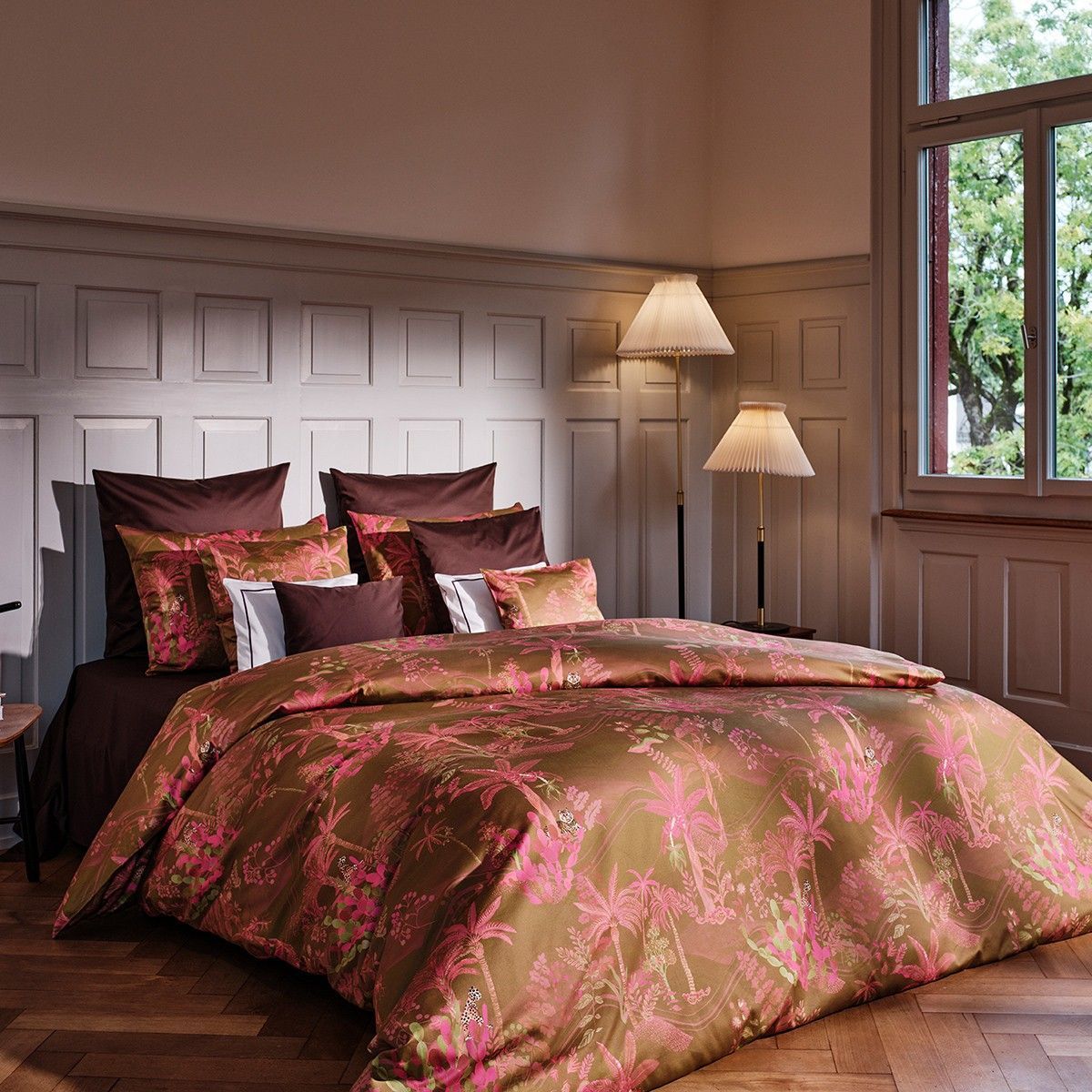
Make an expressive statement with
OASIS bed linen in flashing pink and transform your bedroom into a place full of energy, luminosity and modern elegance.
Farben sagen mehr als 1.000 Worte
Es ist eine weit verbreitete Vorstellung, dass uns Farben nicht nur beeinflussen, sondern dass jede Farbe auch mit einer gewissen Charaktereigenschaft verbunden ist.
Farb-Experte Karsten Homann hat nach dieser Theorie ein Persönlichkeitstest-Team-Training entwickelt, das er Unternehmen anbietet. Basierend auf den Lieblings-Farbkombinationen der Testpersonen analysiert er deren Persönlichkeit.
Humbug? Karsten Homann ist jedenfalls nicht der Einzige, der sich mit Farbpsychologie beschäftigt und damit, wie die Auswahl der Lieblingsfarben einiges über unseren Charakter aussagt.
Evidenzbasierte Farbpsychologie
Prof. Dr. Axel Buether vom Institut für evidenzbasierte Farbpsychologie der Bergischen Universität Wuppertal hat zum Thema erst 2025 eine interessante Studie veröffentlicht.
Er hat den Zusammenhang zwischen Farbpräferenzen und den Big-Five-Persönlichkeitsdimensionen (Extraversion, Offenheit, Verträglichkeit, Gewissenhaftigkeit und Neurotizismus) untersucht. Verblüffend ist, dass die Übereinstimmung zwischen Farbprofilen und Persönlichkeitsmerkmalen sehr hoch war. Extraversion, Verträglichkeit und Offenheit für Erfahrungen scheinen sich besonders stark in den Farbvorlieben der Menschen widerzuspiegeln. Und, was noch spannender ist: Andere Menschen, denen die Lieblingsfarben der Versuchsteilnehmer gezeigt wurden, haben deren Charaktereigenschaften sehr genau an den Farbkombinationen erraten können.
Die Farbpsychologie hat in den letzten Jahren immer mehr Interesse geweckt. Schliesslich sind Farben ein universelles Kommunikationsmittel. Einerseits rufen sie eine biologische Reaktion hervor, etwa erhöhte Aufmerksamkeit bei Rottönen, wie auch Karsten Homann unterstreicht. Andererseits haben sie kulturelle und persönliche Bedeutung – in der westlichen Welt gilt Blau beispielsweise als Farbe für Vertrauen.
Wo Sprache an ihre Grenzen stösst, können Farben alles sagen. Sie machen versteckte und unbewusste Seiten der Persönlichkeit sichtbar, die sonst schwer auszudrücken sind. Nicht zuletzt, weil die deutsche Sprache laut Duden nur etwa 140.000 Wörter enthält. Die Farbnuancen dieser Welt aber sind unendlich.