



Childhood memories in the form of fabric: Why we long for certain materials
June 1, 2026
"Emotions and memories are closely intertwined with our sensory experiences. This is how we carry childhood memories into the present day."
There are impressions, colours, fabrics and scents that instantly transport us back to the past, as if on a journey through time. The soft fur of our favourite cuddly toy. The familiar floral pattern on the duvet. The unmistakable smell of Grandma’s living room. The salty taste on our lips after a swim in the sea.
Early childhood memories and unconscious perception
Childhood is a formative phase in every person’s life. Memories from this time run deep, influence us forever and shape our self-image. How far back our memories go is a subject of much research. However, the scientific community remains divided.
‘Early childhood amnesia’ is the name given to the phenomenon that prevents us from remembering the first years of our lives. For a long time, researchers thought that this mysterious forgetting was proof that babies and toddlers had brains too immature to store memories.
In reality, new findings show that our earliest years do not sink into oblivion forever, but are preserved in various forms. And that many factors influence what we will remember later: language, emotions and touch determine which impressions will stay with us later in life. According to neuroscientist Nick Turk-Browne, babies are actually capable of storing experiences from as early as their first year of life.
Newborns learn to recognise their mother’s scent, remember movement patterns and recognise very simple connections. From this, they build
their first picture of the world.
The stuff memories are made of
Long before we learn to speak, we experience our surroundings through touch. It conveys warmth, closeness and security. Our sense of touch is closely linked to the limbic system – the part of the brain responsible for emotions and memories. That is why, even as toddlers, we react so sensitively to materials and to how fabrics feel against our skin. A high-quality cotton fabric that smells of home will trigger a sense of calm, whilst synthetic or rough surfaces can subtly induce stress. This physical sensation is not just about softness, but also about temperature regulation, breathability and the specific weight of textiles. Our bodies remember, even subconsciously, what feels good.
We continue to long for such materials even as adults. Covering ourselves with a blanket whose fabric triggers positive associations on the skin instantly gives us a sense of security.
Implicit and explicit memory
Studies show that even things from our childhood that seem to have been forgotten are not lost forever. We simply lose access to our memories. When such connections become almost tangible again, we speak of a ‘feeling of familiarity’, similar to déjà vu. This stems from what is known as ‘implicit memory’. It is the subconscious memory that operates automatically and helps us to evaluate everyday life in terms of routines and patterns without having to think about it consciously. This experience begins in early childhood.
A gut sense of security
The fact that we find it so difficult to remember our earliest childhood years has to do not only with the brain, but also with how much our perspective on the world – and the world itself – changes over the years. New impressions and old memory traces no longer fit together.
This is where objects and certain materials play an important role. Early sensory impressions shape our perceptions for a lifetime; materials become emotional anchors. This works both consciously and subconsciously.
Fine natural materials such as high-quality long-staple cotton, linen and silk create a space for relaxation. They give us the feeling of having arrived.
Stories convey memories
But language also has a very significant influence on our memories. The timing of our first childhood memory is highly culture-dependent. European respondents can usually recall events that took place after the age of three and a half. Children growing up in East Asian cultures usually have memories from a later age. Study participants with a Māori background, on the other hand, already have memories from the age of two and a half.
The significant memory advantage of Māori children can be explained by the high importance parents attach to discussing events they have experienced. It is not only important to talk about memories, but also to contextualise the emotions. In Māori families, conversations are often particularly detailed, focusing on shared stories and feelings. This so-called ‘elaborative style’ is a good way to train ‘explicit memory’, that is, conscious recall.
To do this, you ask children questions such as:
- “What did you like best about our trip?”
- “Which animal at the zoo would you like to see again?”
- “Tell me what you liked most about that animal.”
It is the stories linked to emotions that stimulate conscious memories. If these are refreshed time and again, they can be carried into adulthood. Even if this may mean that memories change over the years, they remain valuable and carry important emotions into the present.
The new bed linen collection for storytellers of all ages
Christian Fischbacher’s Zoo collection was hand-drawn with this in mind and printed in northern Italy on high-quality cotton satin. It accompanies little ones with gentle stories that foster emotional bonds.
Rituals are particularly important for shaping memories. Repetition offers little moments of happiness that children can look forward to and which give them a sense of security. The role of parents is particularly important in shaping shared traditions. Through stories invented together or read from ‘ ’, they help children make sense of the many impressions they encounter, encourage creativity and stimulate problem-solving skills.
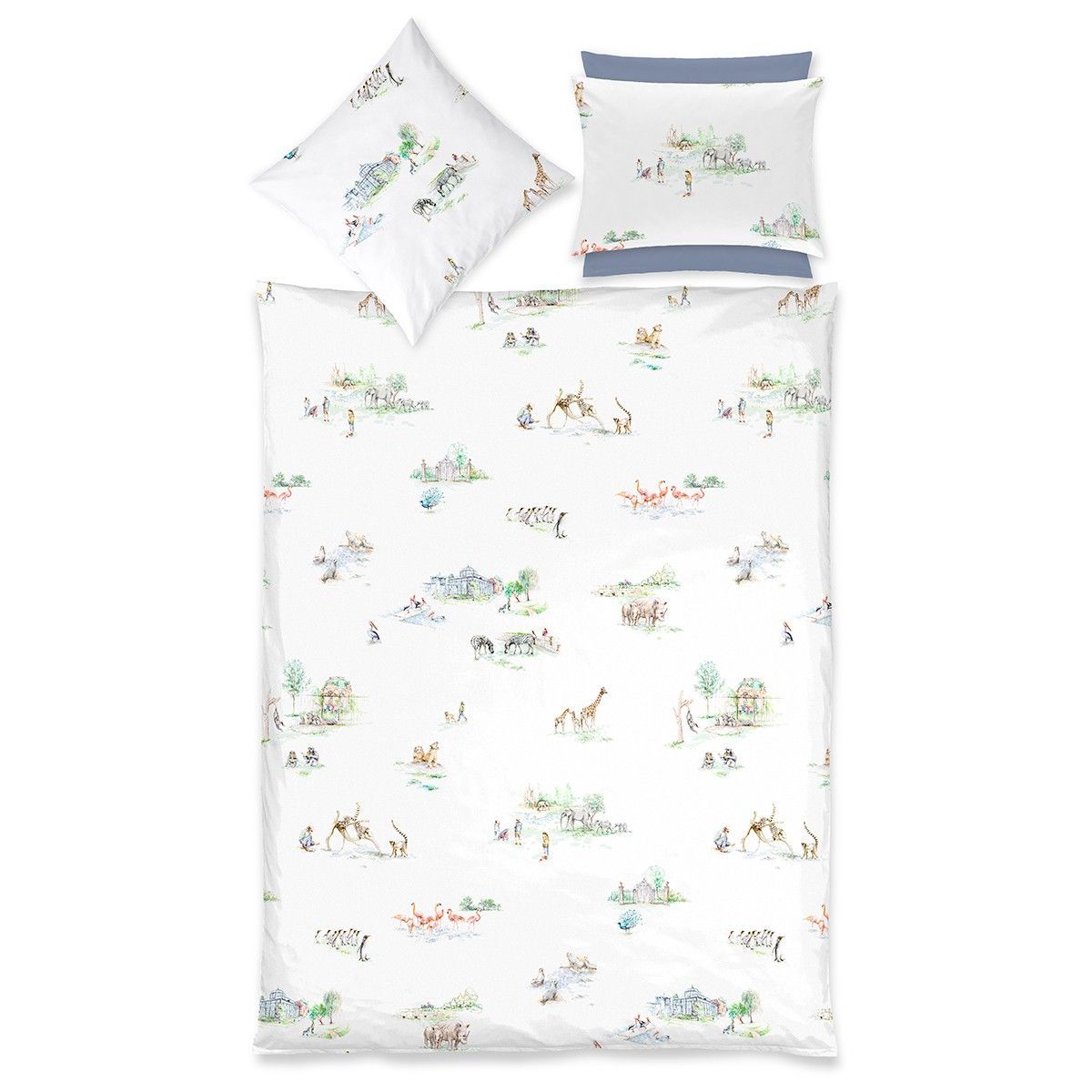
Daily contact with the soft fabric of the bed linen and the chance to see the same familiar animals every day and tell their stories reinforce positive memories and good feelings.
Luxurious bed linen nestles against children’s delicate skin, whilst rhinos look on curiously and flamingos want to know why they are pink.
The new
Kids category also features a matching
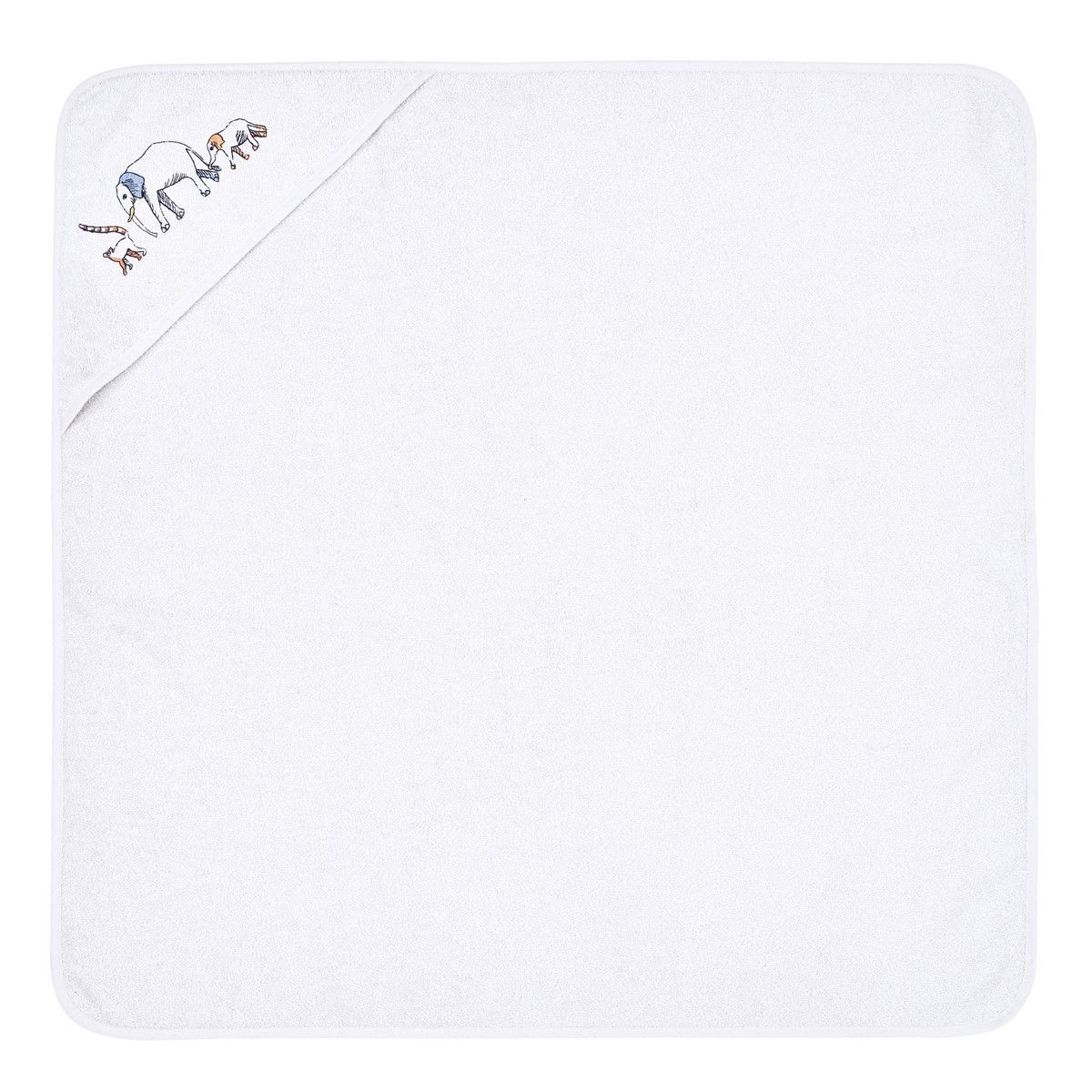
children’s terry set with a hooded towel and a terry towel. The fluffy set is lovingly decorated with embroidery and proves to be a practical everyday companion. These new cosy items also make a wonderful gift idea for grandparents, friends and relatives who want to give the little ones a daily, soft hug.
A longing for beauty and familiarity
Beautiful childhood memories are an anchor for the soul, especially in difficult times. In hindsight, all the negative aspects fade away, for these memories are particularly precious because of their irreplaceable nature.
But nostalgia for the past also stems from the memory of how soothing it is to live in the here and now as a child – without responsibilities or worries.
And thanks to the power of association, it becomes possible, even at 40, to splash about in the sea – with the salty taste on your lips – and suddenly feel that unclouded sense of freedom again, the kind only a schoolchild can experience at the start of the summer holidays. Or to snuggle up in cotton-satin bed linen, listen to a bedtime story and know that there are no monsters lurking under the bed. This return to the past is almost as lovely as it used to be – perhaps even a little better, because it’s a good feeling that lasts a lifetime.